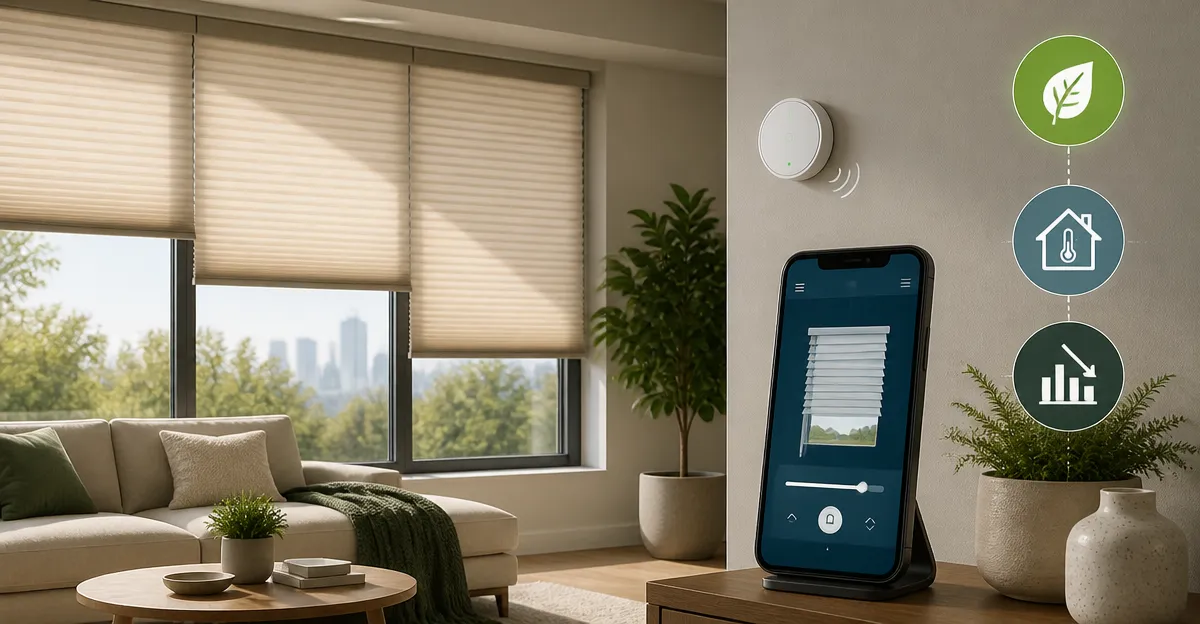
The Complete Guide to Energy‑Saving Smart Blinds: Benefits, Cost Savings, and Home Comfort
Introduction
Smart blinds have transformed the way households manage natural light and temperature. This guide explains the technology behind energy‑saving blinds, the financial impact, and the comfort advantages they provide. Readers will learn how to evaluate different systems, select the most appropriate product, and implement best‑practice strategies for optimal results. By the end of this article, one will possess the knowledge required to make an informed purchase decision.
Background and Context
Traditional window coverings rely on manual operation and provide limited control over solar gain. Modern smart blinds integrate motors, sensors, and wireless connectivity to automate opening and closing based on environmental cues. The core components include a high‑precision motor, a light sensor, a power source—often a rechargeable battery with optional solar charging—and a communication module such as Bluetooth or Wi‑Fi. When linked to a smart‑home hub, these devices can be coordinated with heating, ventilation, and air‑conditioning (HVAC) systems to achieve substantial energy reductions.
Energy savings arise because blinds can block excessive heat during summer and retain warmth during winter, reducing reliance on HVAC equipment. Studies indicate that well‑installed automated blinds can lower heating and cooling loads by up to 15 %. In addition, the ability to schedule daylight harvesting improves occupant comfort while preserving privacy.
Key Concepts and Strategies
Three primary concepts drive the effectiveness of smart blinds: light sensing, solar‑assisted power, and group control. Light sensors detect ambient illumination and adjust slat angles to maintain a constant interior brightness, a feature known as daylight harvesting. Solar‑assisted power extends battery life by converting incidental sunlight into usable charge, which is especially valuable for hard‑to‑reach windows. Group control enables multiple blinds to operate synchronously, simplifying daily routines and ensuring consistent thermal performance across a room.
When selecting a system, consider the type of blinds already installed. Most smart retrofit kits are designed for horizontal blinds with a tilt rod ranging from 6.2 mm to 12 mm in diameter. Vertical blinds, roller shades, and other formats typically require dedicated motorized solutions. Understanding compatibility prevents costly retrofits and ensures a seamless installation experience.
Product Recommendations
For households with existing horizontal blinds, the SwitchBot Smart Electric Motorized Blinds Kit offers a comprehensive package that includes three motor units and a Hub Mini for voice‑assistant integration. Its built‑in 2000 mAh lithium battery paired with a solar panel provides near‑continuous operation, while the precision motor adjusts slats to within 2°. The kit holds a 4.4‑star rating from 802 reviews and is priced at $189.99.
For users who need a single unit or wish to expand an existing system, the SwitchBot Blind Tilt delivers the same core functionality at a lower entry price of $53.99. It also supports solar charging and integrates with Alexa, Google Home, and Siri when paired with a Hub Mini (sold separately). This model carries a 4.4‑star rating from 1,429 reviews.
For premium blackout performance, the Kincmo Motorized Blackout Blinds combine a four‑layer fabric with Matter and Thread connectivity. They provide silent operation, full UV protection, and customizable sizing. The product is rated 5 stars by 781 reviewers and costs $115.99.
Renters or those who cannot drill into walls may prefer the Mansnix No‑Drill Motorized Blackout Blinds. Their patented no‑drill design installs in under ten minutes, and the AA‑battery power source eliminates the need for charging stations. This model is priced at $94.99 and holds a 4.2‑star rating from 270 reviews.
Finally, the Persilux Smart Motorized Roller Shades provide a linen‑style aesthetic with optional solar panels and Zigbee integration for Alexa devices. They are priced at $159.99 and have earned a 4.6‑star rating from 162 reviewers.
Comparison and Selection Guide
Choosing the right smart blind system depends on three factors: existing hardware, desired automation level, and budget. Table 1 summarizes the key specifications of the five products discussed.
| Product | Price | Power Source | Control Options | Rating |
|---|---|---|---|---|
| SwitchBot Smart Electric Motorized Blinds Kit | $189.99 | 2000 mAh battery + solar panel | App, Bluetooth, Hub Mini (Alexa/Google/Siri) | 4.4/5 (802) |
| SwitchBot Blind Tilt | $53.99 | 2000 mAh battery + solar panel | App, Bluetooth, optional Hub Mini | 4.4/5 (1,429) |
| Kincmo Motorized Blackout Blinds | $115.99 | Battery (Li‑ion) + optional solar | App, Matter/Thread, Alexa, Google Home | 5/5 (781) |
| Mansnix No‑Drill Motorized Blackout Blinds | $94.99 | AA batteries (4‑6 months) | Remote, optional 15‑channel remote, optional hub | 4.2/5 (270) |
| Persilux Smart Motorized Roller Shades | $159.99 | Li‑ion battery + USB‑C or solar | App, Zigbee (Alexa), optional hub for Google | 4.6/5 (162) |
For users who already own a SwitchBot Hub Mini, the kit provides the most cost‑effective way to automate multiple blinds simultaneously. Those seeking a single‑unit solution with minimal upfront cost should consider the standalone Blind Tilt. If complete darkness is required for bedrooms or media rooms, Kincmo’s four‑layer blackout fabric offers the highest light‑blocking performance. Renters who cannot modify walls will find the Mansnix no‑drill option the most convenient. Finally, customers who value premium linen aesthetics and Zigbee compatibility may prefer Persilux.
Best Practices & Tips
Install blinds on the sun‑exposed side of each room to maximize energy savings. Position solar panels where they receive at least four hours of indirect sunlight per day; north‑facing installations may require occasional manual charging. Calibrate the light‑sensor settings during the first week of use to match personal comfort preferences.
Group blinds by room and create schedules that align with HVAC set‑points. For example, program morning opening at sunrise to allow passive heating, and schedule evening closure at sunset to retain warmth. Use the app’s geofencing feature to trigger adjustments when occupants leave or return home.
Regularly update firmware to ensure compatibility with new smart‑home standards. Both SwitchBot models have demonstrated reliable over‑the‑air updates that improve solar‑charging efficiency and resolve connectivity bugs. Check the manufacturer’s support portal monthly for the latest releases.
Maintain battery health by avoiding deep discharge cycles. When battery levels drop below 20 %, place the unit on a charger for at least two hours. For AA‑battery powered blinds, replace cells with high‑capacity alkaline or rechargeable NiMH batteries to extend runtime.
Frequently Asked Questions
- How much can smart blinds reduce my energy bill? Typical households report a 5‑15 % reduction in heating and cooling costs, depending on climate, window orientation, and usage patterns.
- Do I need a smart‑home hub for every blind? Only blinds that rely on Wi‑Fi or Matter protocols require a hub for remote control. Bluetooth‑only units operate directly from a smartphone when within range.
- Can I integrate smart blinds with existing home‑automation routines? Yes; most manufacturers provide APIs or support popular platforms such as Alexa, Google Home, Apple HomeKit, and Home Assistant.
- What is the expected lifespan of the motor and battery? Motors are designed for at least 30,000 cycles, roughly equivalent to ten years of daily operation. Battery life varies by usage but generally lasts three to five years before capacity noticeably declines.
- Are there privacy concerns with cloud‑connected blinds? Reputable brands encrypt data in transit and store only minimal usage statistics. Users can disable cloud access and operate devices locally via the hub.
Conclusion
Energy‑saving smart blinds combine convenience, comfort, and cost efficiency in a single solution. By leveraging light sensors, solar charging, and group control, homeowners can achieve measurable reductions in HVAC energy consumption while enjoying automated privacy. Selecting the appropriate product hinges on existing blind type, desired automation depth, and installation constraints. Implementing the best‑practice tips outlined in this guide will maximize performance and extend the lifespan of the system.
Products Featured in This Guide
SwitchBot Smart Electric Motorized Blinds Kit
Price: $189.99 | Rating: 4.4/5 (802 reviews)
Featured for its all‑in‑one kit, solar‑assisted battery, and robust group‑control capabilities, making it ideal for whole‑home automation.
SwitchBot Blind Tilt
Price: $53.99 | Rating: 4.4/5 (1,429 reviews)
Featured as an affordable single‑unit solution that retains all core features of the full kit, suitable for incremental upgrades.
Kincmo Motorized Blackout Blinds
Price: $115.99 | Rating: 5/5 (781 reviews)
Featured for its premium four‑layer blackout fabric, Matter/Thread integration, and near‑silent operation, ideal for bedrooms and media rooms.
Mansnix No‑Drill Motorized Blackout Blinds
Price: $94.99 | Rating: 4.2/5 (270 reviews)
Featured for its tool‑free installation, making it perfect for renters and those who prefer a quick, wall‑friendly setup.
Persilux Smart Motorized Roller Shades
Price: $159.99 | Rating: 4.6/5 (162 reviews)
Featured for its elegant linen appearance, Zigbee connectivity, and optional solar panel, offering a stylish yet functional smart‑shade solution.