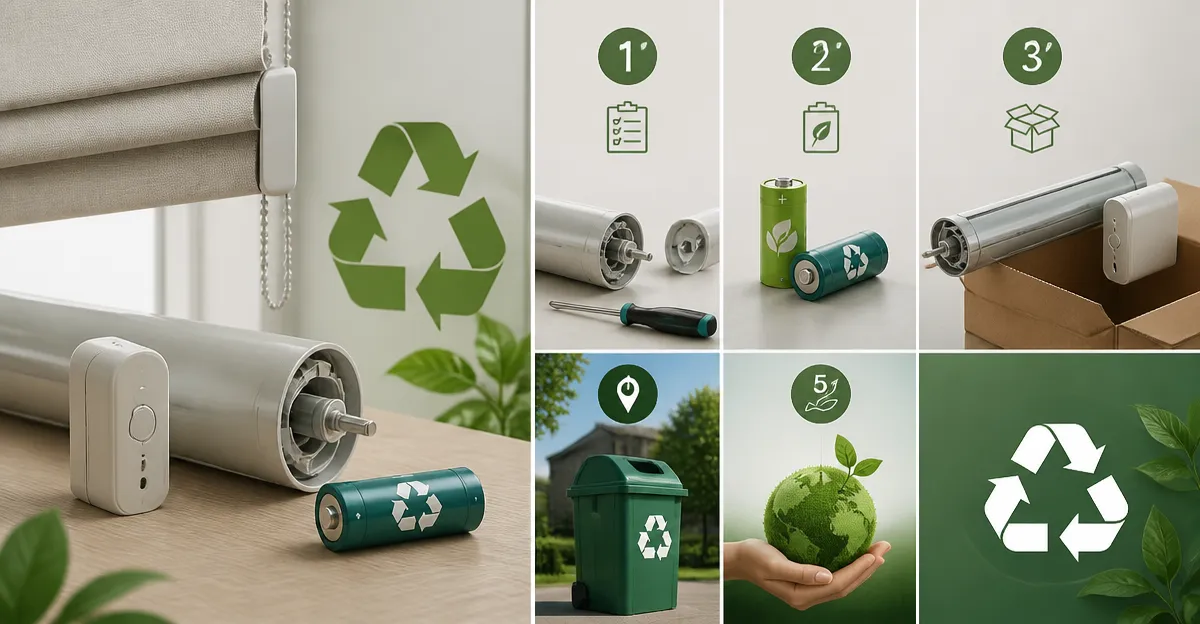
How to Recycle Smart Blind Motors and Batteries: Step‑by‑Step, Eco‑Friendly Guide to Safe Disposal and Where to Recycle
This guide explains how one can responsibly recycle motorized blind systems, including the batteries that power them and the electric motors that drive them. The reader will learn how to disassemble blind components, sort materials for recycling, and locate appropriate drop‑off locations. The information is valuable because improper disposal of lithium‑ion cells and electronic plastics can harm the environment. By following the procedure, one can reduce waste, comply with local regulations, and extend the useful life of recyclable parts.
What You Will Need
- Protective gloves and safety glasses
- Screwdriver set (flat‑head and Phillips)
- Multimeter for voltage verification
- Hunter Douglas Battery Pack – 12‑AA battery holder, $18.95, 4.5/5 rating
- Somfy 12V Battery Tube – 8‑AA lithium tube, $48.95, 4.5/5 rating
- Rollerhouse 12V Shade Motor – DC12V motor, $69.89, 4.4/5 rating
- Somfy Rechargeable Battery Pack – Lithium‑ion pack, $72.95, 4.3/5 rating
- Hunter Douglas Battery Wand – 12‑AA wand, $20.99, 3.9/5 rating
Step 1 – Prepare a Safe Work Area
Begin by selecting a well‑ventilated workspace free of flammable materials. Wear protective gloves and safety glasses to guard against accidental short circuits or sharp edges. Gather all required tools and keep the product packaging for reference. The presence of a multimeter will allow verification that no residual voltage remains in the system before handling.
Step 2 – Disconnect Power and Remove Existing Batteries
Locate the battery compartment on the blind’s motor housing. For Hunter Douglas PowerView shades, the compartment typically holds a 12‑AA pack; for Somfy WireFree motors, an 8‑AA lithium tube is common. Using a screwdriver, gently open the housing and extract the batteries. Verify that the compartment is empty by checking for voltage with a multimeter; a reading of zero confirms safe removal.
At this stage, the Hunter Douglas Battery Pack can serve as a temporary test source. Its ability to hold 12 AA batteries makes it compatible with most PowerView units, and its 4.5‑star rating indicates reliable performance for short‑term testing.
Step 3 – Disassemble the Motor Housing
Remove the motor from the blind tube by loosening the mounting screws. For 1.5‑inch tubes, the Rollerhouse 12V Shade Motor provides a reference design; its dimensions and wiring scheme illustrate how most DC12V motors are constructed. The motor’s copper windings, plastic housing, and metal brackets should be separated carefully to avoid damaging the internal circuitry.
When the motor is removed, inspect the wiring for signs of wear. The Rollerhouse motor’s quiet operation and 6 lb lift capacity demonstrate that low‑voltage DC motors can be repurposed for other DIY projects, reducing overall waste.
Step 4 – Sort Materials for Recycling
Separate the disassembled components into three categories: metal, plastic, and electronic waste. Metal brackets, screws, and motor shafts belong in the metal recycling bin. Plastic housings, including the battery wand shells, can be placed in the appropriate plastic stream if the local program accepts PC (polycarbonate) material. Electronic waste, such as circuit boards and lithium‑ion cells, must be taken to a certified e‑waste facility.
The Somfy 12V Battery Tube is constructed for 8 AA lithium batteries; its design highlights the importance of separating lithium cells from other plastics. The tube’s requirement for lithium batteries only underscores the need for careful handling of these cells during recycling.
Step 5 – Prepare Batteries for Recycling
Place all removed AA batteries in a fire‑proof container. Lithium‑ion cells, such as those found in the Somfy Rechargeable Battery Pack, should be stored at room temperature and never exposed to water. The rechargeable pack’s claim of up to one year of operation on a single charge demonstrates the high energy density of lithium‑ion technology, which also makes it a priority for proper recycling.
When transporting batteries to a recycling center, keep them in a sealed bag to prevent short circuits. Many municipalities accept household batteries at retail drop‑off locations, but larger lithium packs often require specialized e‑waste facilities.
Step 6 – Locate Certified Recycling Facilities
Use online resources such as Earth911 or local government websites to identify e‑waste collection points that accept motorized blind components. Verify that the facility accepts both electronic circuit boards and lithium‑ion batteries. Some facilities provide free pick‑up services for bulk items, which can be useful for homeowners with multiple blind systems.
When delivering the metal and plastic fractions, follow the facility’s sorting guidelines to avoid contamination. Proper segregation ensures that metals can be melted down for new products, while plastics can be re‑processed into new components.
Step 7 – Document the Recycling Process
Maintain a record of the items recycled, including serial numbers, dates, and the recycling facility’s receipt. This documentation can be useful for warranty claims, especially when a replacement product such as the Hunter Douglas Battery Wand is installed in a new system. The wand’s fire‑resistant PC material and easy‑to‑disassemble design make it a convenient replacement for damaged battery packs.
Keeping a log also demonstrates compliance with local environmental regulations, which may require proof of proper disposal for hazardous electronic waste.
Tips & Pro Tips
- Test each battery pack with a multimeter before disposal; a lingering charge can pose a fire risk.
- When removing a motor, label the wires to simplify re‑assembly if the motor is to be reused.
- Consider donating functional motors to community makerspaces; the Rollerhouse motor’s low cost and easy programming make it ideal for educational projects.
- Store lithium batteries in a cool, dry place to prolong their life before recycling.
- Check for manufacturer take‑back programs; both Hunter Douglas and Somfy occasionally offer free recycling of their proprietary components.
Troubleshooting
| Problem | Possible Cause | Solution |
|---|---|---|
| No voltage after battery removal | Residual charge in capacitors | Allow the motor to sit for 15 minutes, then re‑measure with a multimeter. |
| Battery wand does not fit | Incorrect model compatibility | Verify the blind’s label for Platinum Technology 2.0, 2.1, or Generation 3 before purchasing the Hunter Douglas Battery Wand. |
| Lithium cells leak | Expired or damaged batteries | Dispose of leaked cells in a sealed container and contact a hazardous waste facility. |
Conclusion
By following this guide, one can safely disassemble, sort, and recycle smart blind motors and their associated batteries. The process protects the environment, complies with regulations, and may even provide reusable components for future projects. Incorporating reliable tools such as the Hunter Douglas Battery Pack, Somfy 12V Battery Tube, and Rollerhouse Shade Motor simplifies each step and ensures a professional outcome. One should continue to stay informed about local recycling policies to maintain responsible disposal practices.
Products Mentioned in This Guide
Frequently Asked Questions
How can I safely disassemble a smart blind motor for recycling?
Wear protective gloves and safety glasses, then use a screwdriver set to remove screws and detach the motor housing before handling internal components.
What parts of a motorized blind system are recyclable?
The electric motor, metal brackets, plastic casings, and the lithium‑ion or AA batteries can all be recycled separately.
How should I handle the lithium‑ion batteries removed from smart blinds?
Test the voltage with a multimeter, place them in a fire‑proof container, and take them to a certified battery recycling drop‑off.
Where can I drop off recycled smart blind motors and batteries?
Check local e‑waste centers, hardware store recycling programs, or municipal hazardous waste facilities for accepted drop‑off locations.
Do I need any tools or safety equipment before recycling smart blind components?
Yes, you’ll need protective gloves, safety glasses, a flat‑head and Phillips screwdriver, and a multimeter to ensure safe disassembly and handling.