Introduction
This guide examines solar-powered smart blinds, a technology that merges automatic shading with renewable energy. Readers will learn how the system works, its advantages and disadvantages, and practical advice for selecting the right product. The article also highlights five highly rated blinds that illustrate different approaches to solar integration and smart control.
By the end of the guide, one will understand the key concepts, be able to compare major options, and know best‑practice installation and maintenance steps. The information is based on real‑world product data, customer feedback, and industry standards.
Background and Context
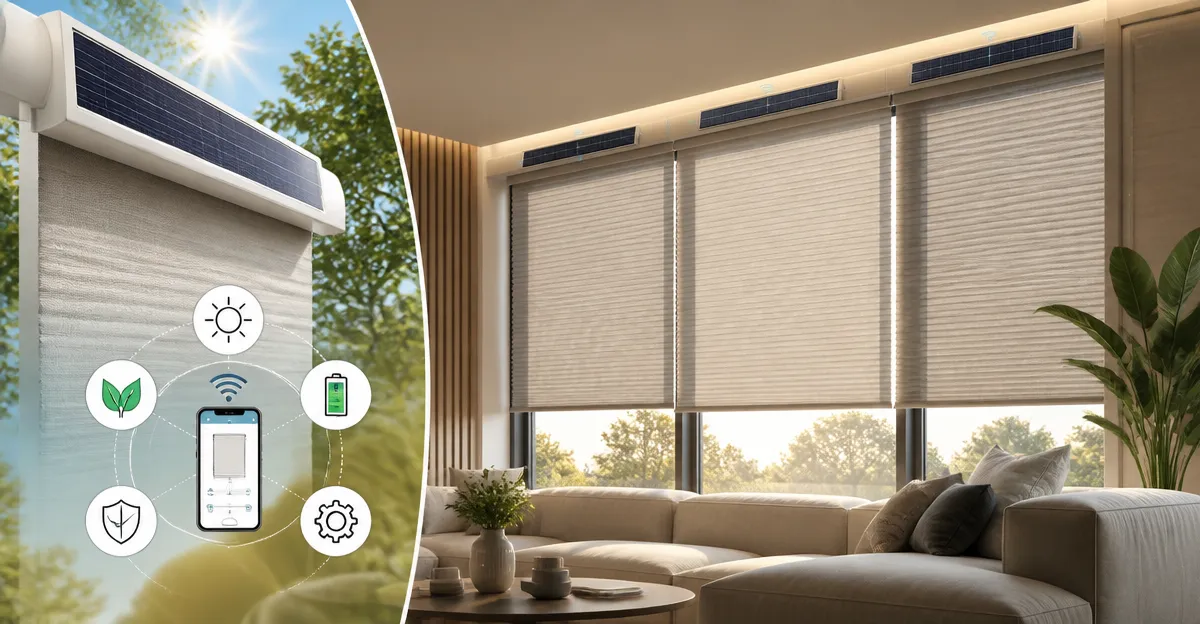
Smart blinds automate the opening and closing of window coverings to regulate light, privacy, and temperature. Traditional motorized blinds rely on wired power or replaceable batteries, which can limit placement and increase operating costs. Solar-powered variants incorporate photovoltaic cells that convert ambient light into electrical energy, extending battery life and reducing the need for frequent replacements.
The technology typically consists of three components: a motorized blind mechanism, a rechargeable battery, and a solar panel that charges the battery during daylight. Integration with Wi‑Fi or Bluetooth hubs enables remote control via smartphone apps, voice assistants such as Alexa and Google Assistant, or scheduled timers.
Because solar panels generate power only when exposed to sufficient light, manufacturers often pair them with high‑capacity lithium batteries (e.g., 2000 mAh) to ensure operation during cloudy periods or at night. The result is a self‑sustaining shading solution that can lower energy consumption and improve indoor comfort.
Key Concepts and Product Recommendations
1. Installation Simplicity
One of the most common barriers to adopting smart blinds is the perceived difficulty of installation. Products that use a no‑drill, adhesive mounting system reduce the need for tools and preserve wall integrity, which is especially valuable for renters.
The Hapadif Motorized Roller Blinds exemplify this approach. They feature a single adhesive extension block that secures the blind inside the window frame without drilling. The remote control operates the blackout fabric, and the motor draws power from an internal battery compartment.
Key specifications include a price of $89.60, a rating of 4.4/5 from 527 reviews, and a 2‑year warranty on motors and controllers. The product’s three‑layer blackout fabric provides UV protection and privacy, making it suitable for bedrooms, living rooms, and offices.
2. Solar Battery Longevity
Solar charging capability is a decisive factor for users who want a truly maintenance‑free solution. The solar panel must be sized to replenish the battery after each day's usage.
Both the SwitchBot Smart Blind Kit and the SwitchBot Blind Tilt incorporate a built‑in 2000 mAh lithium battery paired with a solar panel. The kit includes three Blind Tilt units and a Hub Mini, allowing group control of up to four blinds per button. Users report reliable performance even on north‑facing walls, although charging speed may vary with sun exposure.
The Smart Blind Kit retails for $139.99 and holds a 4.4/5 rating from 804 reviewers. The single Blind Tilt unit costs $53.99 with a rating of 4.4/5 from 1,433 reviews. Both products support Alexa, Google Home, and Siri when paired with the Hub Mini.
3. Voice and App Integration
Seamless integration with voice assistants and smartphone apps enables users to create schedules, adjust light levels, and trigger scenes based on sunrise or sunset.
The Allesin Motorized Blackout Blinds provide a Smart Hub accessory that connects the blinds to the Tuya app, Alexa, and Google Assistant. The optional 15‑channel remote expands control to multiple shades, while the USB Converter offers basic single‑device connectivity.
Price is $64.99, rating 4.2/5 from 302 reviews. The motor runs on AA batteries with up to six months of operation per set, and the motor noise is below 30 dB, ensuring a quiet environment.
4. Cost‑Effective Alternatives
For budget‑conscious consumers, a straightforward motorized blind with a remote may provide sufficient automation without the added complexity of solar panels.
The MANSNIX Motorized Blackout Blinds use AA batteries and a one‑channel remote. They feature a patented no‑drill design, jacquard blackout fabric, and a 2‑year warranty. At $— (price not provided), the product offers a balance of convenience and affordability.
While lacking solar charging, the unit’s battery life of 4‑6 months reduces maintenance frequency, and an optional 15‑channel remote or hub can add smart functionality.
Comparison and Selection Guide
| Feature | Hapadif Motorized Roller Blinds | SwitchBot Smart Blind Kit (3‑Pack) | SwitchBot Blind Tilt | Allesin Motorized Blackout Blinds | MANSNIX Motorized Blackout Blinds |
|---|---|---|---|---|---|
| Price (USD) | 89.60 | 139.99 (3‑Pack) | 53.99 | 64.99 | Not listed |
| Rating | 4.4/5 (527) | 4.4/5 (804) | 4.4/5 (1,433) | 4.2/5 (302) | 4.2/5 (277) |
| Solar Charging | No | Yes (built‑in panel) | Yes (built‑in panel) | Optional via Smart Hub | No |
| Installation Type | No‑drill adhesive | Retrofit with templates | Retrofit with templates | Outside mount recommended | No‑drill patented |
| Voice Control | Alexa/Google via hub | Alexa/Google via Hub Mini | Alexa/Google via Hub Mini | Alexa/Google via Smart Bridge | Optional remote hub |
| Battery Life | Standard AA (replaceable) | 2000 mAh lithium | 2000 mAh lithium | AA up to 6 months | AA 4‑6 months |
When choosing a product, consider the following criteria:
- Mounting constraints: No‑drill options are ideal for renters; retrofit kits suit existing horizontal blinds.
- Energy autonomy: Solar‑enabled blinds reduce battery swaps, but require adequate sunlight exposure.
- Smart ecosystem: Verify compatibility with the preferred voice assistant or home automation platform.
- Budget: Single‑unit kits cost less upfront, while multi‑unit bundles provide economies of scale.
Best Practices & Tips
- Measure the window opening accurately before ordering. For outside‑mount blinds, add 4 cm to both width and height to ensure proper coverage.
- When installing solar panels, orient them toward the brightest part of the day. South‑facing placement maximizes charge, but east or west can still provide sufficient power.
- Use the provided templates (SwitchBot) or adhesive blocks (Hapadif) to align motor mounts precisely. Misalignment can cause premature wear.
- Schedule routine firmware updates via the manufacturer’s app. Several reviewers noted that outdated firmware prevented solar charging.
- Combine blinds with smart thermostats or lighting systems to create holistic energy‑saving scenes. For example, program blinds to close at peak sun hours while the thermostat raises the cooling setpoint.
- Maintain battery health by replacing AA cells before they reach low voltage. Lithium batteries benefit from periodic full‑charge cycles.
- For Zigbee‑based products (Allesin), keep a reset button accessible or document the module pinout in case a factory reset is required.
Frequently Asked Questions
Can solar‑powered blinds operate on cloudy days?
Yes. The built‑in lithium battery stores enough energy to run the motor for several days without direct sunlight. However, prolonged overcast conditions may gradually deplete the battery, requiring occasional manual charging.
Do I need a hub for voice control?
Most products require a hub or bridge to translate Bluetooth or Wi‑Fi signals to Alexa, Google Assistant, or Siri. The SwitchBot Hub Mini and Allesin Smart Bridge are examples of such devices.
Are the blinds noisy?
All five products report motor noise below 30 dB, which is comparable to a whisper. Users of the Hapadif and Allesin models specifically mention quiet operation.
Can I retrofit vertical blinds?
No. The SwitchBot Blind Tilt and similar retrofit kits are designed for horizontal blinds with a tilt rod of 6.2 mm–12 mm diameter. Vertical blinds require a different motor architecture.
How long does installation typically take?
Installation time varies. The Hapadif blinds can be installed in under 30 minutes using the adhesive block. SwitchBot kits may require 45 minutes for the first unit, but subsequent installations often take 10‑15 minutes.
What warranty coverage is offered?
Hapadif provides a 2‑year warranty on motors and controllers. MANSNIX offers a 2‑year warranty and a 60‑day repair policy. Other brands typically include a one‑year warranty on the motor and battery.
Conclusion
Solar‑powered smart blinds represent a convergence of convenience, energy efficiency, and modern aesthetics. By understanding installation methods, solar charging capabilities, and ecosystem compatibility, consumers can select a solution that fits their lifestyle and budget. Whether one prefers a no‑drill roller shade, a retrofit kit for existing blinds, or a budget‑friendly battery‑only model, the market offers a range of options that deliver reliable automation and enhanced comfort.
Applying the best‑practice tips—accurate measurement, proper solar orientation, regular firmware updates, and integration with broader smart‑home routines—will maximize the benefits of any chosen system.
Products Featured in This Guide
Hapadif Motorized Roller Blinds
Price: $89.60 | Rating: 4.4/5 (527 reviews)
Featured for its no‑drill installation, three‑layer blackout fabric, and optional smart hub for voice control.
SwitchBot Smart Blind Kit
Price: $139.99 (3‑Pack) | Rating: 4.4/5 (804 reviews)
Featured for its solar‑charged 2000 mAh battery, group control via Hub Mini, and compatibility with major voice assistants.
SwitchBot Blind Tilt
Price: $53.99 | Rating: 4.4/5 (1,433 reviews)
Featured for its precise 2° adjustment, built‑in light sensor, and optional hub for full smart‑home integration.
Allesin Motorized Blackout Blinds
Price: $64.99 | Rating: 4.2/5 (302 reviews)
Featured for its eco‑friendly triple‑layer fabric, quiet motor, and optional Tuya bridge for voice control.
MANSNIX Motorized Blackout Blinds
Rating: 4.2/5 (277 reviews)
Featured for its patented no‑drill design, affordable jacquard blackout fabric, and optional smart‑remote expansion.