Introduction
Home automation has expanded beyond lighting and thermostats to include window coverings. Motorized blinds provide privacy, energy efficiency, and convenience, yet the market offers a range of technologies that differ in power source, installation complexity, and smart‑home integration. This article compares five Amazon‑listed products: SwitchBot Blind Tilt Motor, SwitchBot Motorized Blinds Kit, Rollerhouse DC12V Shade Motor, Rollerhouse Roller Shade Motor Kit, and RYSE SmartShade Battery Pack. Understanding their differences matters because the right choice can reduce energy consumption, simplify installation, and align with a homeowner’s existing smart‑home ecosystem.
Individual Product Overviews
SwitchBot Blind Tilt Motor
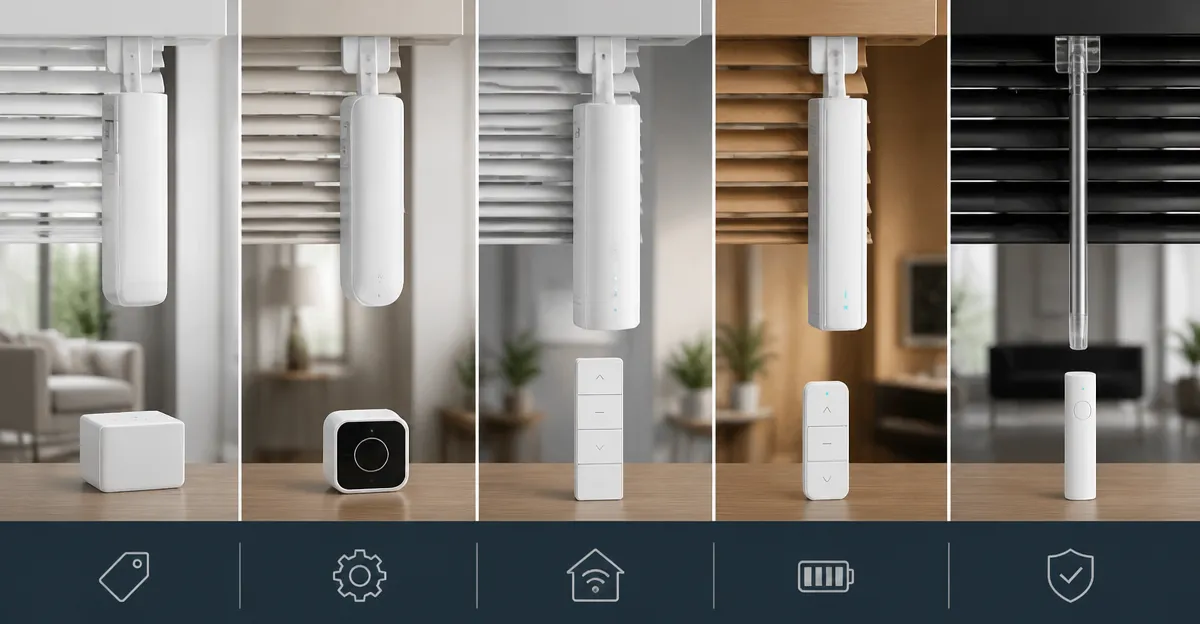
The SwitchBot Blind Tilt Motor retrofits horizontal blinds that use a tilt rod, eliminating the need to replace existing louvers. Priced at $59.99, it includes a 2000 mAh lithium battery paired with a solar panel for continuous charging. Precise alignment control adjusts blinds to within 2°, and an integrated light sensor automatically maintains desired illumination. Bluetooth control via the SwitchBot app permits grouping of up to four blinds; remote operation through a Hub Mini (sold separately) adds Alexa, Google Home, and Siri compatibility. The device supports pole diameters from 6.2 mm to 12 mm, but it does not work with vertical blinds, roller shades, or roller blinds.
SwitchBot Motorized Blinds Kit
The SwitchBot Motorized Blinds Kit bundles three Blind Tilt units with a Matter‑enabled Hub Mini for $179.99. Like the single motor, each unit uses a 2000 mAh battery and solar panel, providing endless power. The Matter protocol enables native Apple HomeKit control, while the Hub Mini also supports Alexa, Google Home, and Siri. Group control extends to unlimited sets when the hub is used, and the high‑precision motor offers 2° adjustment resolution with an automatic light‑sensor response. This kit is designed for homeowners who require multiple blind upgrades and desire a single hub for cross‑platform integration.
Rollerhouse DC12V Shade Motor
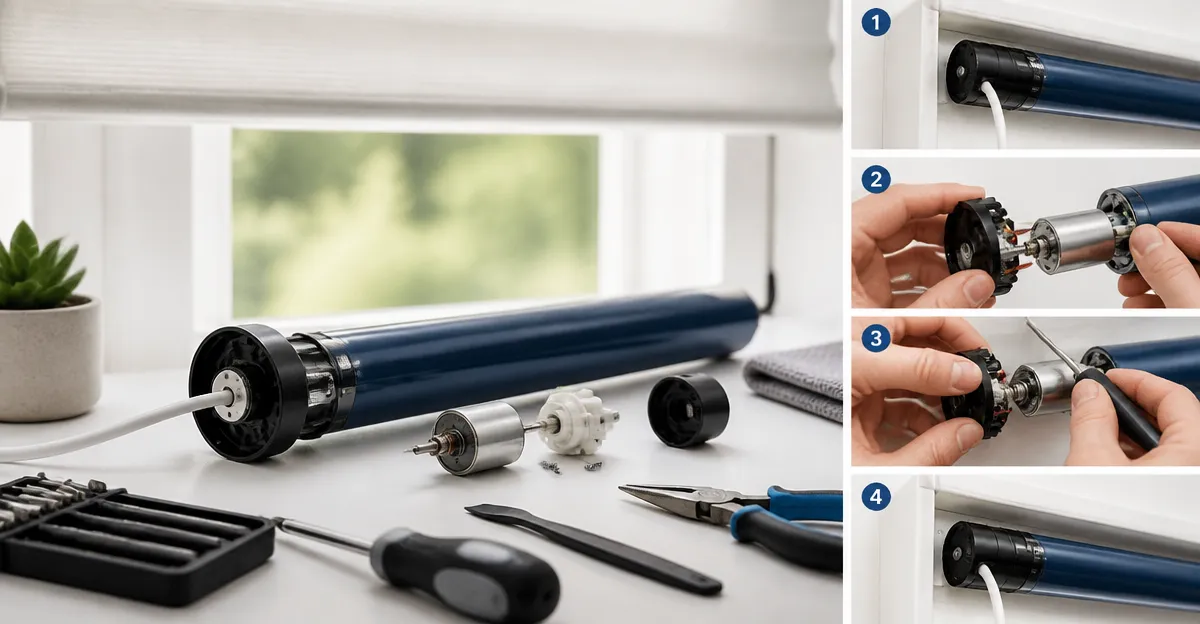
Rollerhouse offers a wired DC12V motor for DIY retrofit of roller shades that fit a 1.5 inch tube, priced at $69.89. The motor draws power from a low‑voltage 12 V source and can be wired to a central power supply, allowing multiple shades to share one circuit. It provides a lift capacity of 6 lb (2.7 kg) at 34 rpm, and remote control adjusts upper and lower limits. Installation requires removal of the existing clutch mechanism and insertion of the motor, making it suitable for technically inclined users who prefer a hard‑wired solution.
Rollerhouse Roller Shade Motor Kit
The Rollerhouse Wireless Kit is a rechargeable, battery‑powered motor system for 1.5 inch tubular shades, costing $94.99. It includes a wireless motor, remote control, and an 8.4 V charging adapter, with optional solar charging. The kit can lift up to 8.8 lb and is compatible with sheer horizontal blinds, roller and roman shades, and mini blinds, but not with pleated, aluminum, or vertical blinds. Installation involves unclipping the existing chain drive, measuring tube dimensions, and inserting the motor, offering a cordless solution for hard‑to‑reach windows.
RYSE SmartShade Battery Pack
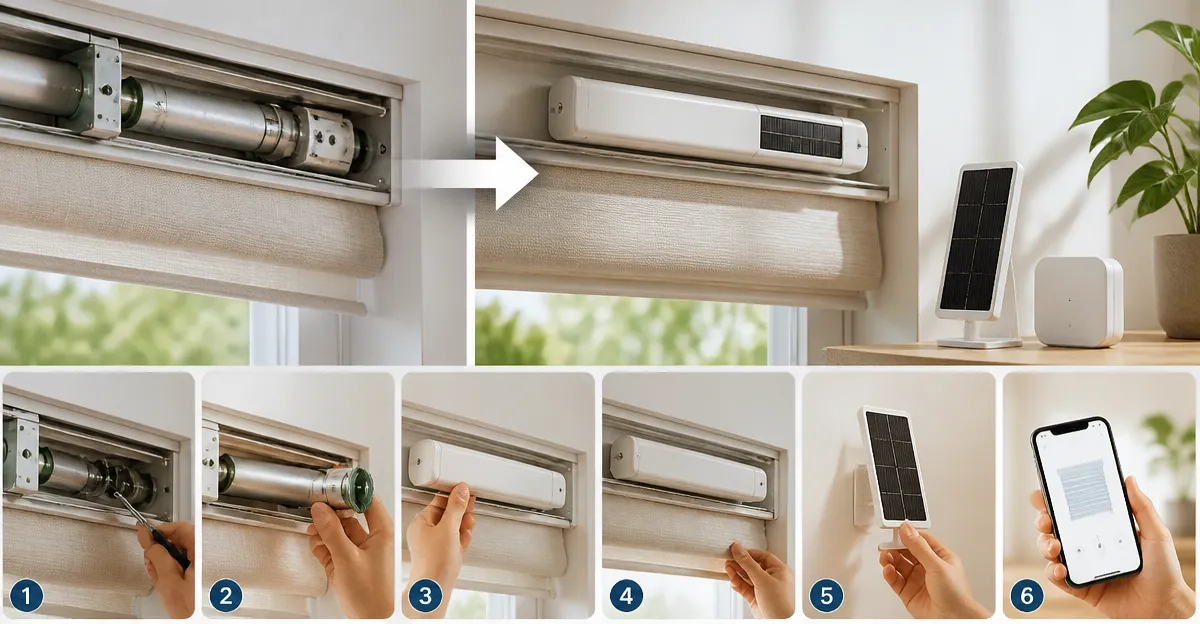
RYSE provides a battery‑powered SmartShade conversion kit for $199.98, designed to attach to the beaded chain of most existing window shades. The system requires the optional RYSE SmartBridge for integration with Google Home, Amazon Alexa, or Apple HomeKit. It can lift shades up to 10 lb and spans windows as large as 9 × 9 ft. Installation is marketed as a five‑minute DIY task without wiring, emphasizing sustainability by preserving existing textiles and reducing waste.
Head-to-Head Comparison
Price and Value
- SwitchBot Blind Tilt Motor offers the lowest entry price at $59.99, delivering solar charging and Bluetooth control.
- Rollerhouse DC12V Shade Motor is slightly more expensive at $69.89, but requires additional wiring components.
- Rollerhouse Wireless Kit costs $94.99, adding rechargeable convenience at a moderate price.
- SwitchBot Motorized Blinds Kit, at $179.99, includes three motors and a Matter hub, representing higher upfront cost but greater scalability.
- RYSE SmartShade Battery Pack is the most expensive at $199.98, reflecting its broad lift capacity and ecosystem integration.
Features and Specifications
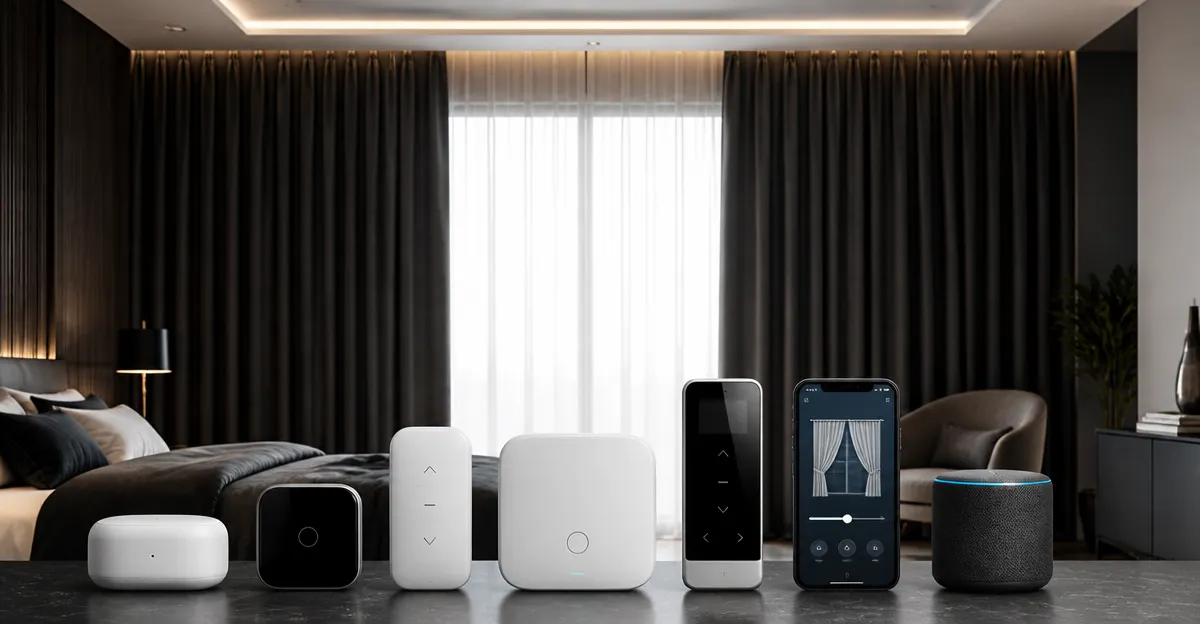
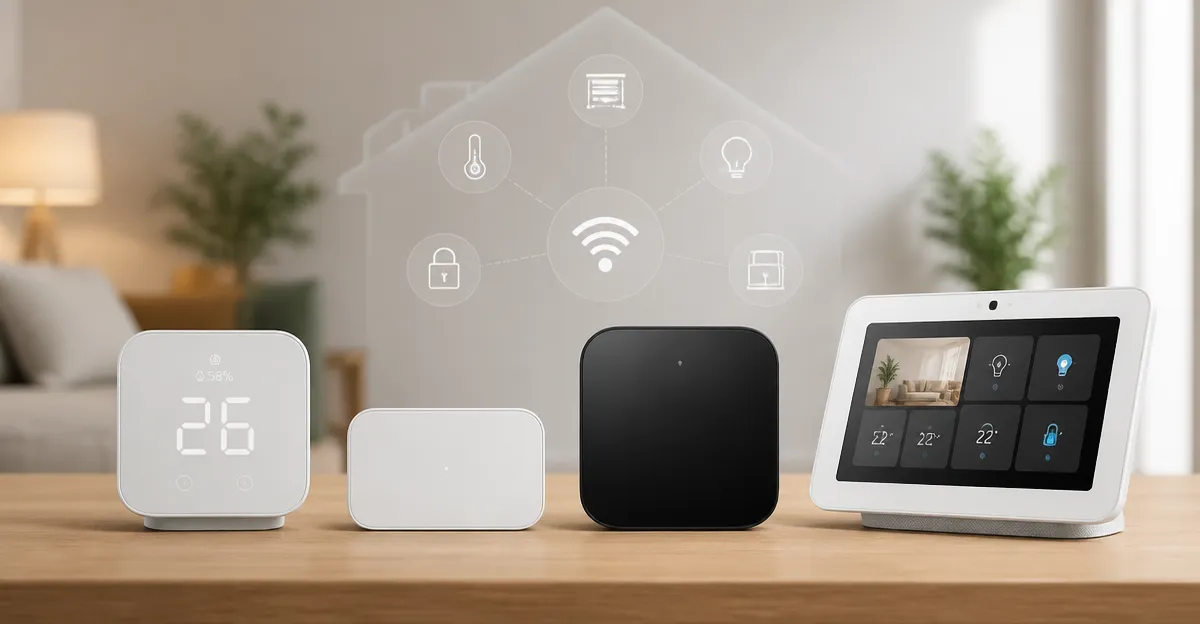
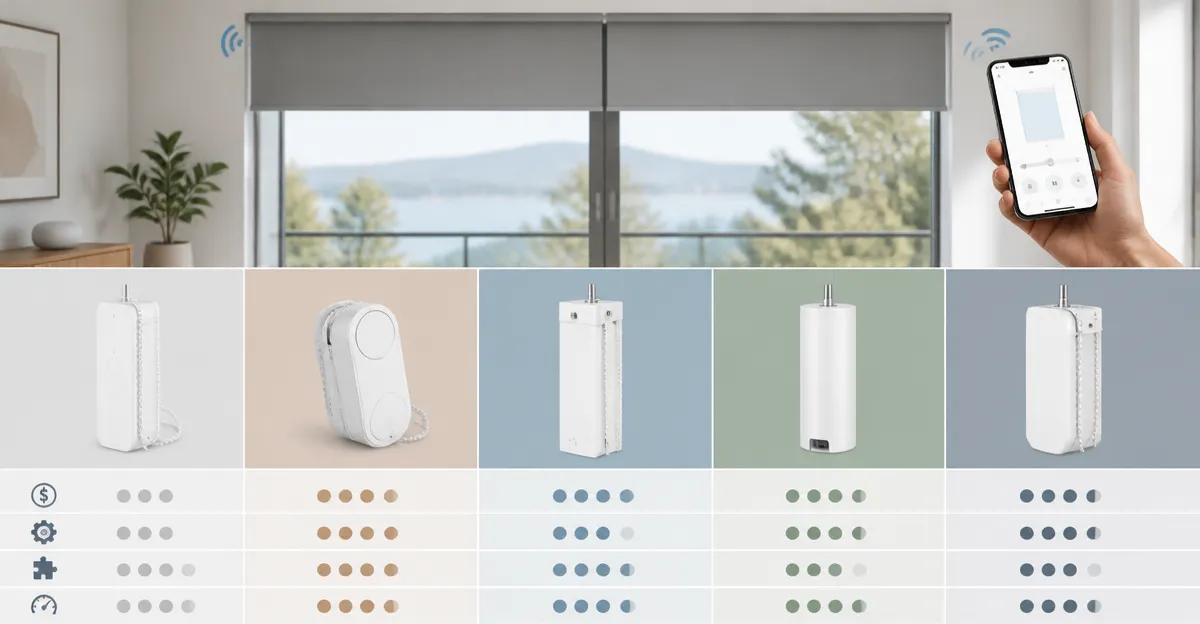
All products provide motorized operation, yet they differ in power source, control protocol, and compatibility. SwitchBot devices rely on a built‑in 2000 mAh battery with solar supplementation, while Rollerhouse DC12V requires external wiring. The Rollerhouse Wireless Kit and RYSE SmartShade use rechargeable batteries, with the former offering optional solar charging. In terms of smart‑home protocols, SwitchBot’s Hub Mini supports Matter, Alexa, Google Home, and Siri; RYSE requires the SmartBridge for similar integration. Rollerhouse models lack native voice‑assistant support, relying on remote control or third‑party hubs.
Customer Ratings and Feedback
SwitchBot Blind Tilt Motor holds a 4.4‑star rating from 1,464 reviews, indicating strong satisfaction. The Motorized Blinds Kit improves slightly to 4.6 stars from 73 reviews, reflecting positive experiences with the bundled hub. Rollerhouse DC12V Shade Motor also rates 4.4 stars from 52 reviews, while the Wireless Kit receives 4.3 stars from 163 reviews. RYSE SmartShade records a 4.0‑star rating from 56 reviews, suggesting room for improvement in user experience or support. These figures demonstrate that all products achieve respectable approval, with SwitchBot’s ecosystem receiving the highest average rating.
Performance and Reliability
SwitchBot’s high‑precision motor claims 2° adjustment accuracy, and the solar‑assisted battery reduces downtime. User feedback frequently mentions reliable Bluetooth connectivity within range. Rollerhouse DC12V’s wired design provides consistent power, but installation complexity can affect long‑term reliability if not performed correctly. The Wireless Kit’s rechargeable battery offers convenience, yet users must monitor charge cycles. RYSE’s battery pack emphasizes sustainability, though reliance on an external SmartBridge adds a potential point of failure.
Size, Power, Compatibility, and Price
| Product | Power Source | Compatible Shades | Control Method | Price (USD) |
|---|---|---|---|---|
| SwitchBot Blind Tilt Motor | 2000 mAh battery + solar | Horizontal blinds with tilt rod (6.2‑12 mm pole) | Bluetooth app; Hub Mini for voice assistants | 59.99 |
| SwitchBot Motorized Blinds Kit | 2000 mAh battery + solar | Same as Blind Tilt (3 units) | Bluetooth + Matter Hub Mini | 179.99 |
| Rollerhouse DC12V Shade Motor | 12 V DC wired | 1.5 in. tube roller shades | Remote control; wired programming | 69.89 |
| Rollerhouse Roller Shade Motor Kit | Rechargeable 8.4 V battery (solar optional) | Sheer horizontal, roller, roman, mini blinds (1.5 in. tube) | Wireless remote | 94.99 |
| RYSE SmartShade Battery Pack | Rechargeable battery | Any shade with beaded chain (up to 10 lb) | Mobile app via SmartBridge | 199.98 |
Pros & Cons
SwitchBot Blind Tilt Motor
- Pros: Low price, solar charging, precise 2° adjustment, Bluetooth grouping, light sensor automation.
- Cons: Requires separate Hub Mini for remote voice control, limited to horizontal blinds with specific pole diameters.
SwitchBot Motorized Blinds Kit
- Pros: Includes three motors and Matter‑enabled hub, broad smart‑home compatibility, same solar battery technology.
- Cons: Higher upfront cost, still limited to horizontal blinds, hub sold as part of kit only.
Rollerhouse DC12V Shade Motor
- Pros: Wired power ensures continuous operation, suitable for multiple shades on one circuit, robust lift capacity.
- Cons: Installation requires electrical work, no native smart‑home integration, remote only.
Rollerhouse Roller Shade Motor Kit
- Pros: Battery powered, cordless installation, compatible with several shade types, optional solar charging.
- Cons: Lower lift capacity than RYSE, requires separate mounting bracket, no built‑in voice‑assistant support.
RYSE SmartShade Battery Pack
- Pros: Converts existing shades without replacement, large lift capacity (10 lb), integrates with major voice platforms via SmartBridge, promotes sustainability.
- Cons: Most expensive, depends on external SmartBridge for smart features, limited to beaded‑chain shades.
Recommendations
For homeowners on a tight budget who need to automate a single set of horizontal blinds, the SwitchBot Blind Tilt Motor provides the best value. Users requiring multiple blind upgrades and seamless Matter integration should consider the SwitchBot Motorized Blinds Kit. Those who prefer a wired, always‑on solution for roller shades will find the Rollerhouse DC12V Shade Motor most reliable. If cordless operation and easy retrofitting are priorities, the Rollerhouse Roller Shade Motor Kit is appropriate. Finally, environmentally conscious users who wish to preserve existing beaded‑chain shades and integrate with all major voice assistants should select the RYSE SmartShade Battery Pack.
FAQ
- Can SwitchBot Blind Tilt Motor be used on vertical blinds? No, it only supports horizontal blinds with a tilt rod of 6.2 mm to 12 mm diameter.
- Does the Rollerhouse DC12V motor require a professional electrician? Installation involves low‑voltage wiring, which a competent DIYer can perform, though professional assistance is recommended for safety.
- What smart‑home protocols does the SwitchBot Hub Mini support? The Hub Mini supports Matter, Alexa, Google Home, and Siri, allowing cross‑platform voice control.
- Can the RYSE SmartShade operate without the SmartBridge? It can motorize shades manually via the app, but integration with Google Home, Alexa, or HomeKit requires the SmartBridge.
- Is solar charging optional for the Rollerhouse Wireless Kit? Yes, the kit includes an 8.4 V charging adapter, and solar panels can be added for continuous power.
- What is the lift capacity of the Rollerhouse Wireless Kit? The motor can lift up to 8.8 lb (approximately 4 kg) of shade material.
- How accurate is the adjustment of SwitchBot motors? The motor can adjust blinds to within 2° of the desired angle, providing fine‑grained light control.
Conclusion
Each product reviewed offers a distinct blend of price, power source, and smart‑home compatibility. The SwitchBot lineup excels in precision, solar sustainability, and voice‑assistant integration, making it ideal for users who value seamless automation. Rollerhouse provides both wired and wireless options for traditional roller shades, catering to DIY enthusiasts who prefer either continuous power or cordless convenience. RYSE distinguishes itself through environmental stewardship and broad lift capacity, though at a higher cost and with reliance on an additional bridge. Selecting the appropriate motor depends on shade type, budget, and desired ecosystem; the comparative data above equips buyers with the information needed to make an informed decision.
Frequently Asked Questions
What are the main power source differences between SwitchBot, Rollerhouse, and RYSE blind motors?
SwitchBot motors are typically mains‑powered with optional battery backup, Rollerhouse models use a 12V DC power supply, and the RYSE SmartShade relies on a rechargeable battery pack.
Which motorized blind system offers the simplest DIY installation?
The SwitchBot Motorized Blinds Kit is designed for plug‑and‑play mounting with minimal wiring, making it the easiest for DIY users.
Can these blind motors integrate with popular smart‑home platforms?
Both SwitchBot and Rollerhouse support Alexa, Google Assistant, and Apple HomeKit, while RYSE primarily integrates via its own app and limited third‑party bridges.
How do motorized blinds affect home energy efficiency?
Automated blinds can lower heating and cooling costs by automatically closing during hot or cold periods, reducing window heat loss or gain.
Is a battery‑powered motor like RYSE suitable for large sliding glass doors?
R YSE’s battery pack is best for lightweight shades; larger sliding doors usually require a higher‑torque, wired motor such as the Rollerhouse DC12V Shade Motor.