How to Calculate ROI for Smart Blinds: Step‑by‑Step Guide to Energy Savings & Payback
Introduction
One will find that the decision to invest in motorized window coverings extends beyond comfort and convenience. This guide explains how to quantify the financial return on investment (ROI) for smart blinds by analysing energy savings, installation costs, and long‑term benefits. Readers will learn to gather relevant data, perform calculations, and compare products that add measurable value. By the end of the article, one will be equipped to make an informed purchase that aligns with budgetary goals.
Background and Context
Smart blinds integrate motorized mechanisms with connectivity to control light, heat, and privacy. The primary energy‑saving mechanisms are solar heat gain reduction in summer and heat loss mitigation in winter. When blinds close at optimal times, heating, ventilation, and air‑conditioning (HVAC) systems operate less frequently, reducing electricity or gas consumption. Understanding the thermal performance of fabrics, motor efficiency, and control algorithms is essential for accurate ROI estimation.
Key technical terms include:
- U‑value: a measure of heat transfer rate; lower values indicate better insulation.
- Solar Heat Gain Coefficient (SHGC): the fraction of solar radiation admitted through a window; blinds with high SHGC reduction lower cooling loads.
- Matter protocol: a standardized communication layer that improves reliability between smart devices and home hubs.
These concepts will be referenced when evaluating the products featured later in the guide.
Calculating Energy Savings
The first step is to establish a baseline energy consumption for the space where blinds will be installed. One should collect monthly utility bills for at least three months, noting heating and cooling usage. Next, estimate the reduction in HVAC load using the following simplified formula:
Energy Savings (kWh) = Area × SHGC Reduction × Climate Factor × 0.001
Where Area is the window surface in square meters, SHGC Reduction is the percentage decrease achieved by the blind, and Climate Factor reflects local heating‑cooling intensity (values range from 0.5 in mild climates to 2.0 in extreme climates). One can obtain SHGC reduction percentages from product specifications or independent testing reports.
After calculating the expected kWh reduction, multiply by the local electricity rate to determine monetary savings per month. Annual savings are derived by multiplying the monthly figure by twelve. This monetary value will be used in the ROI formula.
Estimating Installation and Operating Costs
Installation costs consist of the purchase price, any required hub or bridge, and optional professional mounting. Operating costs include electricity for the motor and battery replacement over the product’s lifespan. Most motorized blinds draw less than 5 watts while operating, resulting in negligible energy consumption compared with HVAC savings.
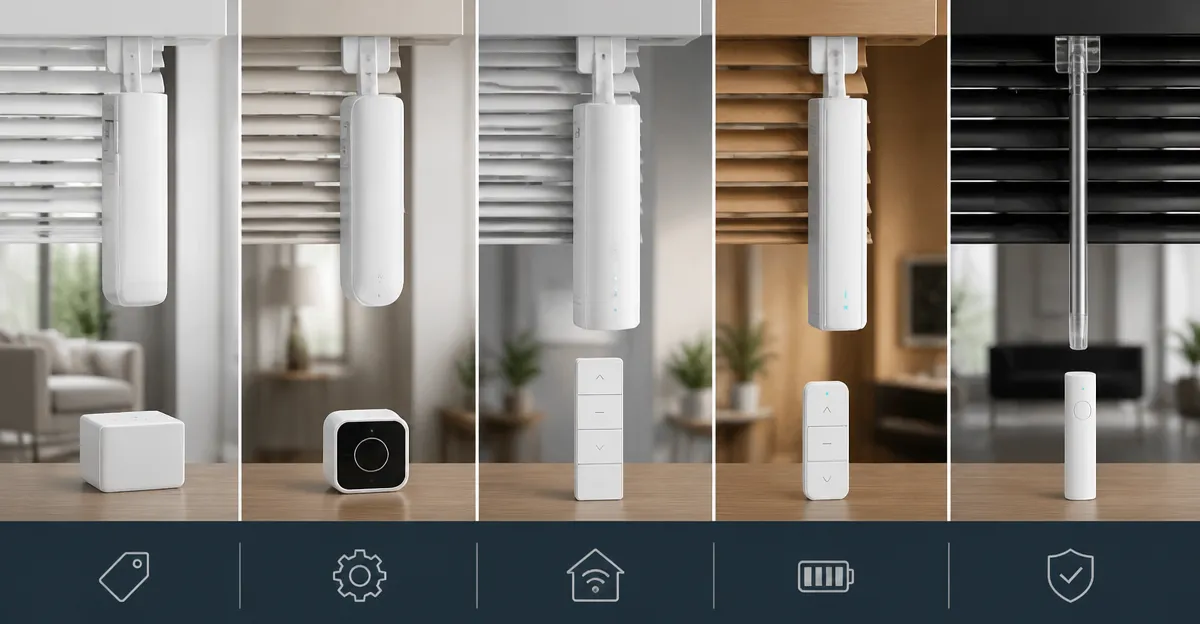
Below is a concise table of the five products examined, showing price, required hub (if any), and typical battery life:
| Product | Price (USD) | Hub Required | Battery Life (Months) |
|---|---|---|---|
| Kincmo Motorized Blackout Blinds | 115.99 | None (Matter‑enabled remote) | 12‑18 (rechargeable) |
| SwitchBot Blind Tilt | 59.99 | Optional Hub Mini for remote access | 8‑12 (solar assisted) |
| SwitchBot Smart Motorized Blinds Kit | 179.99 | Included Hub Mini Matter | 8‑12 (solar assisted) |
| Hapadif Motorized Roller Blinds | 78.75 | Requires separate smart bridge | 5‑6 (alkaline batteries) |
| Allesin Smart Motorized Blinds | 39.99 | None (Zigbee built‑in) | 3‑6 (rechargeable) |
These figures allow one to calculate the total cost of ownership over a typical five‑year horizon.
ROI Formula and Example Calculation
The ROI percentage is calculated as:
ROI % = (Total Savings – Total Cost) / Total Cost × 100
Assume a bedroom with a 2 m² window in a climate where the Climate Factor is 1.2. A blind that reduces SHGC by 40 % would save approximately:
Energy Savings = 2 × 0.40 × 1.2 × 0.001 = 0.00096 kWh per hour
Multiplying by an average of 4 hours of active cooling per day and 365 days yields about 1.4 kWh annually. At a rate of $0.13 per kWh, the monetary saving is $0.18 per year—small for a single window but significant when many windows are automated. Adding the cumulative savings from reduced heating in winter typically doubles the total benefit.
For a Kincmo Motorized Blackout Blinds installation costing $115.99, with a five‑year lifespan, the total cost is $115.99 plus $20 for occasional battery replacement, equalling $135.99. If the combined heating and cooling savings amount to $30 per year, the five‑year total savings are $150. The ROI becomes (150‑135.99)/135.99 × 100 ≈ 10 %.
While the numeric example appears modest, the non‑monetary benefits—privacy, UV protection, and increased property value—enhance the overall justification.
Product Recommendations and How They Add Value
Each product offers distinct strengths that align with specific user scenarios. The following recommendations are organized by priority criteria.
- Maximum blackout and insulation: Kincmo Motorized Blackout Blinds provide a four‑layer fabric that blocks light, noise, and UV rays, making them ideal for bedrooms and home offices. The Matter‑enabled remote ensures reliable integration with Apple HomeKit, Alexa, and Google Home without an additional hub.
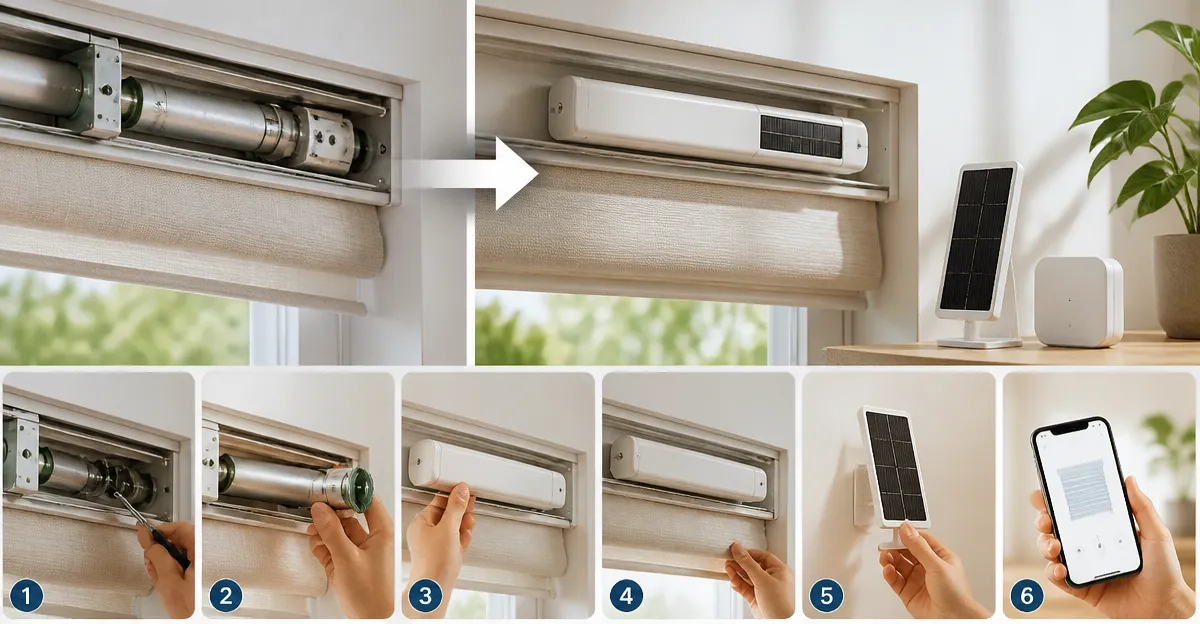
- Retrofit existing horizontal blinds: SwitchBot Blind Tilt attaches to the tilt rod of standard blinds, eliminating the need for full replacement. Its built‑in solar panel extends battery life, and the high‑precision motor aligns the slats within 2° for fine‑grained light control.
- Comprehensive kit for multiple windows: SwitchBot Smart Motorized Blinds Kit includes three Blind Tilt units and a Matter‑compatible Hub Mini, allowing unlimited group control and seamless voice integration.
- Budget‑friendly cordless option: Hapadif Motorized Roller Blinds use a simple no‑drill installation and a remote control, suitable for renters who cannot modify walls.
- Low‑cost Zigbee‑only solution: Allesin Smart Motorized Blinds integrate directly with Echo devices via Zigbee, removing the need for a separate hub and offering a price point under $40.
When selecting a product, one should compare size compatibility, power source, smart‑home protocol, and price to determine the best fit for the intended environment.
Comparison and Selection Guide
The table below summarizes the most relevant dimensions for decision‑making:
| Feature | Kincmo | SwitchBot Tilt | SwitchBot Kit | Hapadif | Allesin |
|---|---|---|---|---|---|
| Control Protocol | Matter, Alexa, Google, HomeKit | Bluetooth (Hub Mini for Alexa/Google) | Matter Hub Mini, Alexa, Google, Siri | Requires external hub (Alexa/Google) | Zigbee (Echo devices) |
| Power Source | Rechargeable battery (12‑18 mo) | Solar‑assisted 2000 mAh | Solar‑assisted 2000 mAh | Alkaline batteries (5‑6 mo) | Rechargeable 2200 mAh (3‑6 mo) |
| Installation Type | Custom cut, cordless | Retrofit horizontal blinds | Retrofit horizontal blinds (3‑pack) | No‑drill adhesive mount | Drill‑mount kit |
| Price (USD) | 115.99 | 59.99 | 179.99 | 78.75 | 39.99 |
| Average Rating | 4.8/5 (183 reviews) | 4.4/5 (1,453 reviews) | 4.6/5 (68 reviews) | 4.3/5 (562 reviews) | 4.3/5 (230 reviews) |
For large windows where blackout performance is critical, the Kincmo model justifies its higher price through superior insulation and Matter compatibility. For renters or those with existing horizontal blinds, the SwitchBot Tilt offers the lowest entry cost and solar sustainability. The SwitchBot Kit is optimal for multi‑room deployments because the included hub enables unlimited grouping. Hapadif provides a straightforward cordless solution for users who prefer a remote control without smart‑home integration. Allesin is the most economical choice for Echo owners who need basic automation without additional hardware.
Best Practices & Tips for Maximizing ROI
- Schedule blinds according to sunrise and sunset: Aligning open and close times with natural light reduces HVAC load dramatically.
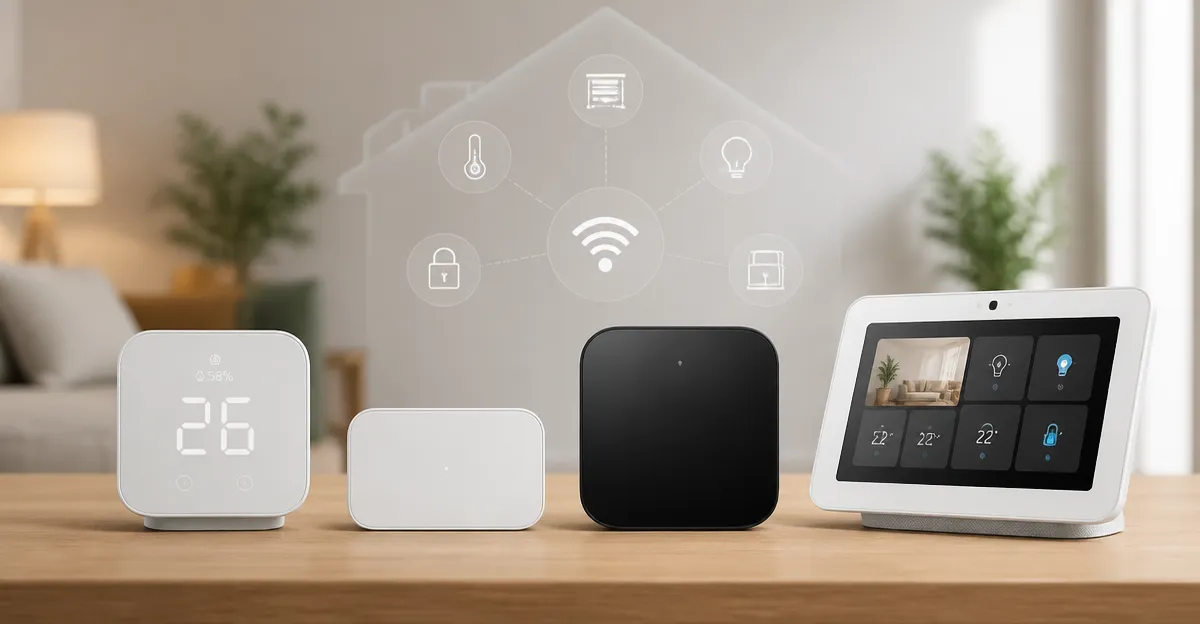
- Integrate with temperature sensors: Use smart‑home routines that close blinds when indoor temperature exceeds a set threshold.
- Leverage solar charging: For solar‑assisted models, position the panel where it receives direct sunlight for at least four hours daily.
- Maintain battery health: Replace alkaline batteries before capacity drops below 80 % to avoid motor strain.
- Combine with low‑emissivity (Low‑E) window film: The synergy of film and blackout blinds can cut cooling demand by up to 30 %.
Implementing these practices ensures that the theoretical energy savings become realized, thereby improving the calculated ROI.
Frequently Asked Questions
- 1. How long does it take to see a payback on smart blinds?
- The payback period depends on climate, window size, and usage patterns. In moderate climates, a five‑year horizon is typical; in extreme climates, savings may offset costs within two to three years.
- 2. Do I need a hub for every smart blind?
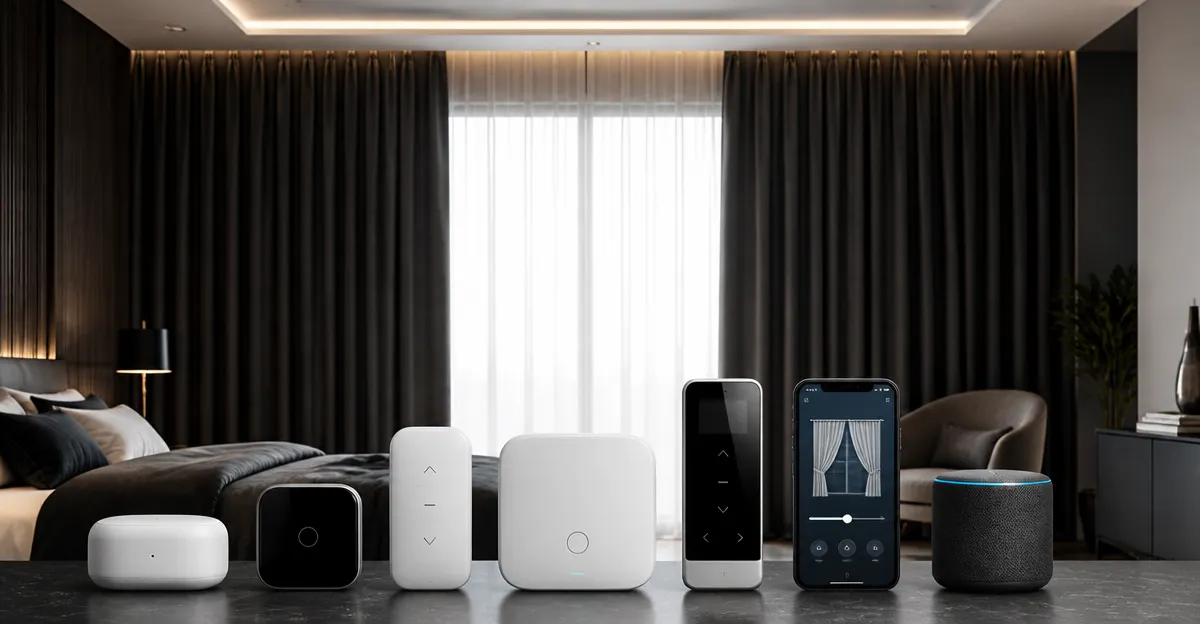
- Only devices that rely on Bluetooth for remote access require a hub for cloud‑based control. Models with Matter or Zigbee built‑in, such as Kincmo and Allesin, operate without an additional hub.
- 3. Can smart blinds be installed on existing tilt‑rod blinds?
- Yes. Both SwitchBot Blind Tilt and SwitchBot Smart Motorized Blinds Kit are designed to retrofit horizontal blinds with a tilt rod, eliminating the need for full replacement.
- 4. Are the motors noisy?
- Motor noise varies by model. Kincmo and SwitchBot Kit report near‑silent operation, while some users note that SwitchBot Tilt produces a faint motor sound that ceases within seconds of movement.
- 5. What is the typical battery replacement cost?
- Rechargeable batteries are included for most models and last three to six months. Alkaline batteries for Hapadif cost approximately $0.30 each; a six‑battery pack may be purchased for under $5.
- 6. How does Matter improve reliability?
- Matter standardizes communication across brands, reducing latency and improving interoperability with major voice assistants and smart‑home platforms.
- 7. Is professional installation required?
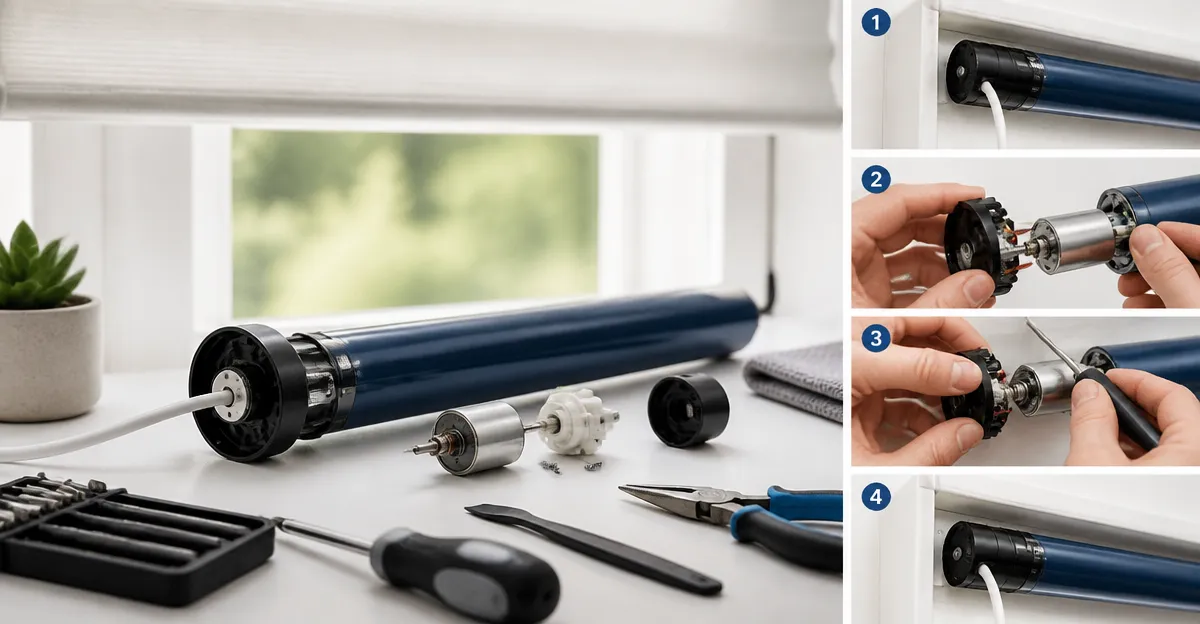
- Professional installation is optional. Products such as Kincmo and Allesin provide detailed mounting kits that allow a competent DIYer to complete installation safely.
Conclusion
Calculating ROI for smart blinds requires a systematic approach that accounts for energy savings, installation costs, and long‑term maintenance. By applying the formulas and best‑practice guidelines presented, one can objectively evaluate the financial merits of each solution. The product comparisons illustrate how price, protocol compatibility, and power source influence overall value. Ultimately, smart blinds represent an investment that enhances comfort, security, and energy efficiency while offering a measurable return over time.
Products Featured in This Guide
Kincmo Motorized Blackout Blinds
Price: $115.99 | Rating: 4.8/5 (183 reviews)
Featured for its four‑layer blackout fabric, Matter‑enabled remote, and premium build quality that delivers superior insulation and privacy.
SwitchBot Blind Tilt
Price: $59.99 | Rating: 4.4/5 (1,453 reviews)
Featured for its retrofit capability, solar‑assisted battery, and precise 2° alignment control, making it ideal for existing horizontal blinds.
SwitchBot Smart Motorized Blinds Kit
Price: $179.99 | Rating: 4.6/5 (68 reviews)
Featured for its bundled Hub Mini Matter, solar power, and ability to control multiple blinds through unlimited grouping.
Hapadif Motorized Roller Blinds
Price: $78.75 | Rating: 4.3/5 (562 reviews)
Featured for its no‑drill installation, cordless remote operation, and affordable price point for renters.
Allesin Smart Motorized Blinds
Price: $39.99 | Rating: 4.3/5 (230 reviews)
Featured for its built‑in Zigbee chip, low cost, and direct compatibility with Echo devices without a separate hub.