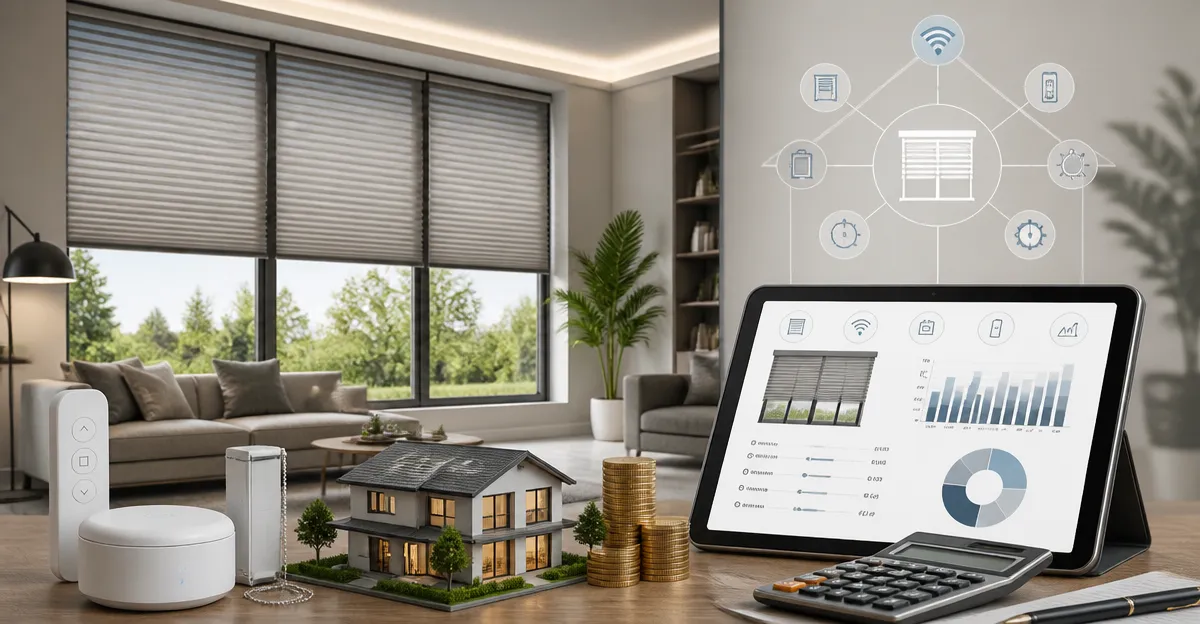
Smart Blinds Installation Cost Calculator: The Ultimate Guide to Estimating Installation Costs & Savings
Introduction
The modern home increasingly relies on automation to improve comfort, energy efficiency, and convenience. Smart blinds represent a convergence of window treatment and home‑automation technology, allowing users to adjust light, privacy, and temperature with a single tap or voice command. This guide explains how to estimate the total cost of installing smart blinds, evaluates the financial impact of energy savings, and presents a practical cost calculator that readers can adapt to their own projects. By the end of the article, readers will understand the variables that affect price, be able to select the most suitable product, and possess actionable tips for a flawless installation.
Background and Context
Traditional blinds require manual operation and provide limited integration with smart‑home ecosystems. In contrast, motorized blinds incorporate a small electric motor, a control module, and often a solar‑charging option. The motor adjusts the slats or raises and lowers the shade based on schedules, light sensors, or voice commands from platforms such as Alexa, Google Home, or Apple HomeKit. The primary cost components include the hardware unit, optional hub or bridge, power source (battery or solar), and professional or DIY installation labor. Understanding these components is essential for accurate budgeting.
Energy savings stem from the ability of smart blinds to reduce heating and cooling loads. By lowering blinds during hot afternoon periods, solar gain is minimized, decreasing air‑conditioning demand. Conversely, opening blinds on cool mornings allows passive solar heating, reducing furnace usage. The United States Department of Energy estimates that window shading can lower HVAC energy consumption by up to 15 % in favorable climates.
Key Concepts for Cost Estimation
Three core concepts drive the cost calculation: hardware price, installation labor, and operational savings. Hardware price is the sum of the blind motor unit, any required hub, and optional accessories such as solar panels or remote controls. Installation labor may be performed by the homeowner or by a certified installer; rates typically range from $50 to $120 per hour depending on region. Operational savings are calculated by estimating the reduction in heating and cooling energy use, expressed in kilowatt‑hours (kWh), and multiplying by the local utility rate.
To illustrate these concepts, the guide presents a simple spreadsheet‑style calculator. Users input the number of windows, the price per motor unit, the cost of any hub, the expected labor hours, and an estimated percentage reduction in HVAC load. The calculator then outputs a projected payback period, helping readers decide whether the investment aligns with their financial goals.
Product Recommendations and How They Fit Into the Calculator
The following products have been selected because they offer a range of price points, power options, and integration capabilities. Each product description includes key specifications, Amazon rating, and a brief note on why it is relevant to the cost‑calculation framework.
SwitchBot Smart Motorized Blinds 3‑Pack
SwitchBot Smart Motorized Blinds 3‑Pack provides a complete retrofit solution for horizontal blinds, including three motor units and a SwitchBot Hub Mini. The units feature a built‑in 2000 mAh lithium battery with an optional solar panel, enabling virtually endless charging cycles. Precise adjustment is achieved through a high‑precision motor that can set slat angle within 2°, and a built‑in light sensor automates daily schedules. At a price of $164.99 for three units, the per‑unit cost is $55.00, which is competitive for a system that includes hub functionality and solar charging. The product holds a 4.4‑star rating from 809 reviews, indicating strong customer satisfaction.
SwitchBot Blind Tilt Motorized Blinds
SwitchBot Blind Tilt Motorized Blinds is a single‑unit option designed for homeowners who need to automate a smaller number of windows. The motor includes the same 2000 mAh battery and optional solar panel as the 3‑Pack, but it requires the purchase of a separate hub for voice‑assistant integration. Priced at $59.99 per unit and rated 4.4 stars from 1,437 reviews, it offers a flexible entry point for incremental upgrades. This product is ideal for the calculator scenario where a user wishes to add a single blind to an existing smart‑home ecosystem.
KINCMO Motorized Blackout Blinds
KINCMO Motorized Blackout Blinds combine full blackout fabric with Matter and Thread connectivity, enabling seamless integration with Apple HomeKit, Alexa, and Google Home without an additional hub. The blinds are powered by a rechargeable battery and can be paired with an optional solar panel. At $115.99 per unit and a 4.8‑star rating from 226 reviews, they represent a premium option for bedrooms or media rooms where light blockage is critical. Their high rating reflects both product quality and responsive customer service, which can reduce post‑installation support costs.
MANSNIX No‑Drill Motorized Blackout Blinds
MANSNIX No‑Drill Motorized Blackout Blinds feature a patented no‑drill installation system, making them especially attractive for renters or homeowners who wish to avoid wall damage. The blinds operate on AA batteries, eliminating the need for a charging infrastructure, and include a 1‑channel remote with an optional 15‑channel remote for group control. Priced at $75.99 and holding a 4.3‑star rating from 239 reviews, they provide a cost‑effective solution for rooms where blackout performance is essential but budget constraints exist.
Yoolax Motorized Blinds
Yoolax Motorized Blinds are custom‑made, offering a range of connectivity options including Zigbee, Matter, and Bluetooth. The blinds include a rechargeable battery that lasts 4–6 months per charge, with an optional solar panel for extended autonomy. At $119.00 per unit and a 4.4‑star rating from 1,215 reviews, Yoolax provides a versatile platform for users who require precise sizing and multiple smart‑home protocol support. Their remote supports up to 16 shades, facilitating group scenes in larger homes.
Comparison and Selection Guide
When choosing a smart blind system, readers should evaluate four criteria: price per window, power source, integration complexity, and blackout performance. The table below summarizes how each product aligns with these criteria.
| Product | Price per Unit | Power | Hub Required | Blackout | Rating |
|---|---|---|---|---|---|
| SwitchBot Smart Motorized Blinds 3‑Pack | $55.00 | Battery + Solar | Included | Partial (UV‑resistant coating) | 4.4 |
| SwitchBot Blind Tilt | $59.99 | Battery + Solar | Optional | Partial | 4.4 |
| KINCMO Motorized Blackout | $115.99 | Rechargeable | No (Matter) | Full (4‑layer) | 4.8 |
| MANSNIX No‑Drill Blackout | $75.99 | AA Batteries | No | Full (3‑layer) | 4.3 |
| Yoolax Motorized Blinds | $119.00 | Rechargeable + Solar | Optional (Matter/Zigbee) | Full (custom fabric) | 4.4 |
Homeowners on a tight budget may prefer the SwitchBot 3‑Pack because it bundles three units and a hub at a low per‑unit cost. Those who prioritize complete darkness for bedrooms should consider KINCMO or MANSNIX, which both provide multi‑layer blackout fabrics. Renters or temporary occupants will find the no‑drill design of MANSNIX advantageous, as it eliminates permanent modifications. Finally, users who require extensive customization and protocol flexibility may opt for Yoolax, which supports Zigbee, Matter, and Bluetooth.
Best Practices & Tips for a Successful Installation
1. Conduct a precise measurement of each window before ordering. Incorrect dimensions lead to additional labor and potential returns. Use a steel tape and record width, height, and pole diameter for horizontal blinds.
2. Verify power availability. Solar panels perform best on south‑facing windows; north‑facing installations may require more frequent battery charging. For low‑sunlight areas, consider a backup AA battery pack or a higher‑capacity rechargeable battery.
3. Install the hub in a central location to maximize Bluetooth range. The SwitchBot Hub Mini, for example, should be placed within 10 meters of the farthest blind to ensure reliable communication.
4. Calibrate the light sensor after physical installation. Most apps provide a calibration routine that records the fully open and fully closed positions; accurate calibration improves automated scheduling.
5. Create grouped scenes in the smart‑home app. Grouping blinds by room allows a single command to adjust multiple windows, reducing daily interaction time and enhancing energy‑saving potential.
6. Schedule regular battery checks. Even with solar assistance, batteries degrade over time. Replace the battery when the app indicates a charge level below 20 % to avoid unexpected failures.
7. Document the installation process with photos. This practice simplifies future troubleshooting and assists professional installers if warranty service is required.
Frequently Asked Questions
- What is the average lifespan of a smart blind motor? Most manufacturers state a lifespan of 5–7 years under normal residential use. Proper battery maintenance and periodic firmware updates can extend this period.
- Can I install smart blinds myself, or should I hire a professional? Installation is designed for DIY enthusiasts with basic tools. However, homeowners with limited experience may benefit from a professional installer, especially when integrating multiple hubs or running custom wiring.
- How much can I expect to save on energy bills? Savings depend on climate and usage patterns, but typical reductions range from 5 % to 15 % of annual HVAC costs. Using the calculator, a homeowner with a $150 monthly heating bill could save $90 to $270 per year.
- Do solar panels work in cloudy climates? Solar panels generate power from diffuse light, but efficiency drops significantly on overcast days. Pairing a solar panel with a battery ensures continuous operation regardless of weather.
- Are the blinds compatible with all smart‑home platforms? Compatibility varies by product. SwitchBot devices require a Hub Mini for Alexa, Google Home, or Siri integration. KINCMO uses Matter, which works natively with Apple HomeKit, Google Home, and Alexa. Yoolax offers Zigbee, Matter, and Bluetooth options, providing the broadest compatibility.
- What warranty coverage is typical? Most products include a one‑year limited warranty covering manufacturing defects. MANSNIX extends a 2‑year warranty and a 60‑day repair policy, while KINCMO offers a similar one‑year warranty with responsive customer service.
- Can I retrofit vertical blinds? The featured products are designed exclusively for horizontal blinds with a tilt rod. Vertical blinds require a different motor architecture and are not supported by these models.
Conclusion
Estimating the cost of smart blind installation requires a systematic approach that accounts for hardware, labor, and projected energy savings. By applying the calculator framework presented in this guide, homeowners can determine a realistic payback period and make an informed purchasing decision. The product lineup reviewed—SwitchBot Smart Motorized Blinds 3‑Pack, SwitchBot Blind Tilt, KINCMO Motorized Blackout Blinds, MANSNIX No‑Drill Blackout Blinds, and Yoolax Motorized Blinds—covers a spectrum of budgets, installation constraints, and integration needs. Following the best‑practice tips will ensure a smooth installation, reliable operation, and maximal return on investment.
Products Featured in This Guide
SwitchBot Smart Motorized Blinds 3‑Pack
Price: $164.99 (3 units) | Rating: 4.4/5 (809 reviews)
Featured for its bundled hub, solar charging option, and precise 2° adjustment, making it a cost‑effective starter kit for multiple windows.
SwitchBot Blind Tilt Motorized Blinds
Price: $59.99 per unit | Rating: 4.4/5 (1,437 reviews)
Featured for its single‑unit flexibility, solar‑assisted battery, and high‑precision motor suitable for incremental upgrades.
KINCMO Motorized Blackout Blinds
Price: $115.99 per unit | Rating: 4.8/5 (226 reviews)
Featured for its full blackout fabric, Matter integration, and premium build quality that delivers high privacy and energy efficiency.
MANSNIX No‑Drill Motorized Blackout Blinds
Price: $75.99 per unit | Rating: 4.3/5 (239 reviews)
Featured for its tool‑free installation, AA‑battery power, and robust blackout performance, ideal for renters and quick deployments.
Yoolax Motorized Blinds
Price: $119.00 per unit | Rating: 4.4/5 (1,215 reviews)
Featured for its custom sizing, multi‑protocol connectivity, and long‑lasting rechargeable battery, providing a versatile solution for larger homes.